What Is 922r Compliance? Requirements and US-Part Basics
922r compliance limits imported parts on semiauto rifles and shotguns. Here’s how to meet the rule.
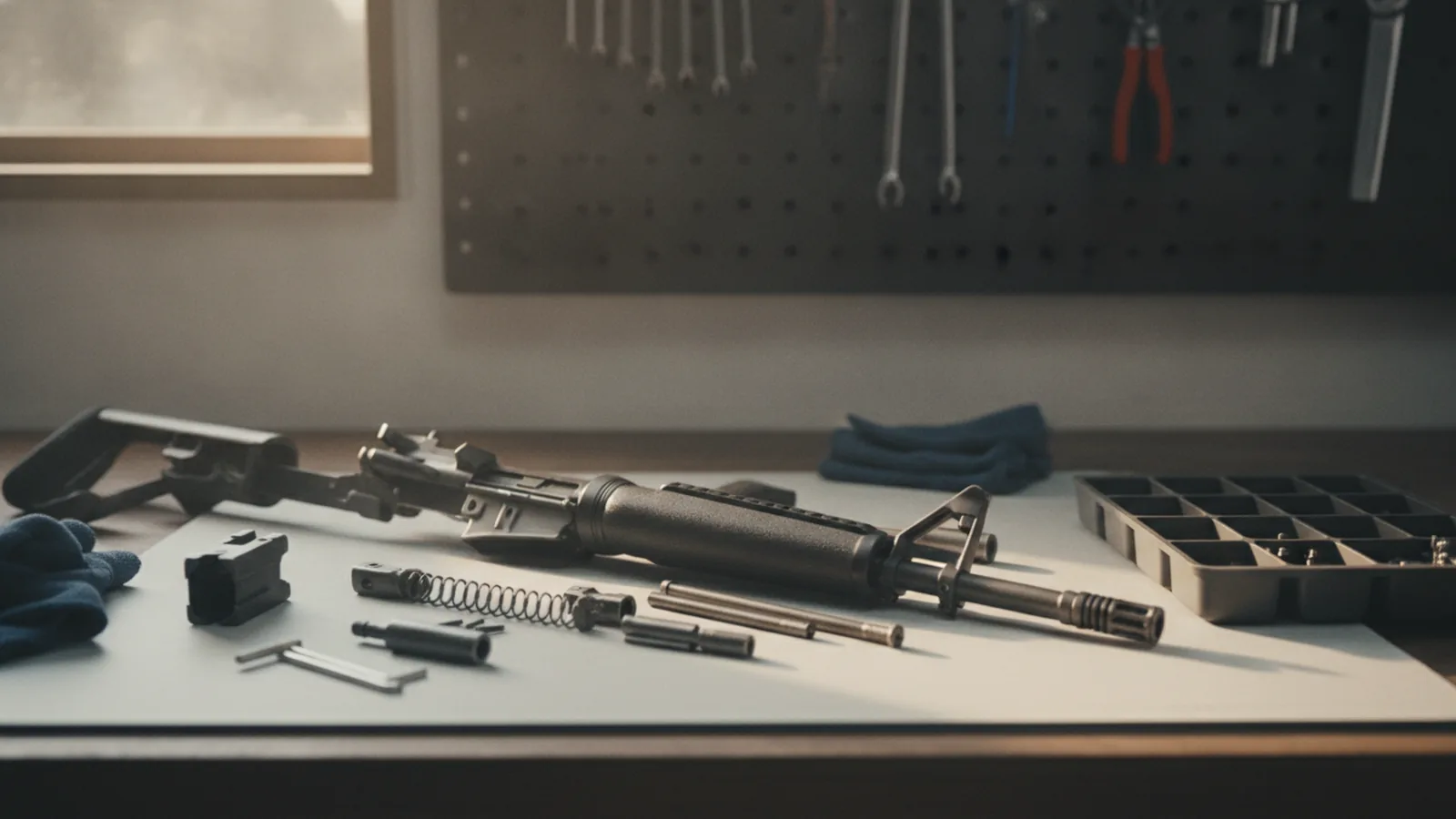
Understanding 922r compliance
What is 922r compliance? It refers to U.S. rules in 18 U.S.C. § 922(r) that restrict certain types of semiautomatic rifle and shotgun assembly.
In practice, 922r compliance is about the number of parts on a firearm that are made outside the United States. If you assemble or build a covered firearm from parts, you must watch how many listed parts are foreign-made.
For imported firearms, the rule can also matter if you modify the gun. For example, swapping components during a build can change your foreign-part count.
Firearms law can be fact-specific. If you are unsure how your exact configuration is counted, seek legal advice for gun owners before you change parts.
Why compliance matters
The importance of compliance is simple: the statute is a criminal law provision. If you are not in compliance, you can face serious consequences.
Non-compliance can include fines and potential imprisonment. The risk does not depend only on intent. It depends on whether your firearm, as assembled, meets the part limits.
Compliance also helps prevent costly mistakes. A common problem is buying a parts kit or barrel assembly without checking how the installed parts will be classified.
Because firearms law evolves through enforcement and guidance, you should verify details using the Bureau of Alcohol, Tobacco, Firearms and Explosives (ATF) resources before relying on older assumptions.
- Builds and modifications can change the foreign-part count.
- Part classification can affect whether a part “counts.”
- Enforcement risk exists even for small changes.

Key components in the 922r rule
Understanding 922r compliance means understanding its counting system. The law points to a list of parts used to assess whether the firearm has too many foreign-made components.
When a semiautomatic rifle or shotgun includes more than ten imported parts from that list, it will not be compliant. That threshold is the core of 922r compliance requirements for most builds.
The list includes parts such as barrels, receivers, triggers, and stocks, among others. The exact list has many entries, and some parts overlap build choices you might think are “cosmetic.”
You should treat the listed parts as the true checklist for counting. Then you can design a build plan that stays under the foreign-part limit.
| Counted part (examples) | What to do |
|---|---|
| Barrel | Confirm whether yours is foreign-made or US-made. |
| Receiver | Check the manufacturer and origin before counting parts. |
| Trigger | Verify which trigger model you installed and its origin. |
| Stock | Swaps can change your foreign-part count. |

Part count regulations: how many US parts for 922r compliance?
A key question people ask is how many US parts for 922r compliance. The effective answer depends on how many foreign-made parts you currently have from the listed items.
The rule is commonly summarized this way: a firearm must contain no more than 10 foreign-made parts from the specified parts list. If you have 11 or more foreign-made listed parts, it is not compliant.
So, rather than counting only US-made parts, you can count foreign-made parts first. Then you decide how many American-made parts you need to replace to bring the foreign count down to 10 or less.
For many builds, American-made parts are used to replace foreign ones. This is why compliance kits exist, and why many builders talk about “compliance kits” or US-made replacement components.
- Identify the firearm type: semiautomatic rifle or shotgun covered by the rule.
- List your installed parts that match the ATF’s 922r part list.
- Count how many of those parts are foreign-made.
- If the foreign count is more than 10, replace enough foreign parts with US-made parts.
Note the wording: “foreign-made” matters, not whether the part is installed from a kit, or whether it is otherwise legally obtained. Origin and the specific part list are what drive the count.
Steps to ensure your firearm meets 922r requirements
Here is a practical way to approach compliance while building or modifying a firearm. Start with the final configuration you will actually assemble, not an “intended” one.
First, confirm which firearm you have and which parts you plan to install. Next, document part origins from manufacturer information, invoices, or other reliable records. This makes later counting and correction much easier.
Then run a structured count using the ATF’s listed parts. After you count foreign parts, decide what to replace to meet the 10-or-fewer foreign-part limit.
Many people accomplish this by choosing American-made parts to replace foreign components. Parts kits can help, but you still must verify each part you install and its origin.
- Build your count from the exact parts installed.
- Keep proof of part origin when possible.
- Replace foreign-made listed parts until you are at 10 or fewer.
- Re-check after every modification.
How “sporting purposes” can affect compliance
The ATF also uses concepts tied to the “sporting purposes” test. Guidance on what qualifies as a sporting-purpose firearm can impact whether the firearm is treated as a covered configuration for these rules.
This matters when you are working with imported firearms law categories and certain semiautomatic designs. If your build plan depends on whether a firearm is treated as “sporting,” check current ATF guidance.
If you are upgrading an imported firearm, sporting purposes can be a real issue. Before you spend money on a compliance plan, verify which standards apply to your exact model and configuration.
Common compliance issues to watch
Most 922r compliance mistakes happen during counting or during assumptions about part origin. A frequent error is forgetting that multiple small parts can each be counted under the listed categories.
Another common issue is relying on marketing language instead of origin documentation. A part may be sold by a US retailer but manufactured overseas. The 922r count turns on the origin of the part.
Builders also run into trouble when they change parts later. For example, a “temporary” swap for testing can push the foreign-part count over the limit.
Finally, people sometimes treat “compliance” as a one-time event. It is not. Your firearm’s configuration determines the result each time you assemble or reassemble it.
| Issue | How it shows up | Fix |
|---|---|---|
| Miscounting foreign-made parts | Assuming only major parts matter | Count every listed part type you installed |
| Missing origin details | Using parts with unknown manufacture country | Get origin info before you finalize the build |
| Late swaps | Changing parts after you “passed” a count | Recount after every change |
| Sporting purposes confusion | Wrong assumption about which rules apply | Check ATF guidance for your configuration |
Resources for further guidance
For most gun owners, the best next step is to rely on ATF materials and credible legal guidance for gun owners. The exact 922r part list, and how parts are classified, is the foundation for any accurate compliance analysis.
When you need a reference point, start with the ATF pages and guidance that discuss the requirements and related concepts like sporting purposes. Then match the guidance to your firearm configuration.
If you are still uncertain, consider speaking with a qualified attorney or firearms law specialist. This is especially important for edge cases involving imported firearms, complex builds, or model-specific questions.
Because enforcement can vary by fact pattern, good documentation and a careful part count are often your best tools.
- ATF resources on 922r and related guidance
- Documentation of part origin for every listed part type
- Legal advice for gun owners for unclear edge cases
For background on the federal statute itself, see the text of 18 U.S.C. § 922.
For ATF guidance that is relevant to sporting purposes concepts, review ATF import and sporting guidance resources.
Frequently asked questions
- What is 922r compliance?
- It is the U.S. rule in 18 U.S.C. § 922(r) that restricts assembly of certain semiautomatic rifles and shotguns based on how many listed parts are foreign-made.
- How many US parts for 922r compliance do I need?
- Instead of a fixed number of US parts, the rule limits foreign-made parts to 10 or fewer. Count your foreign-made listed parts and replace enough parts to get to 10 or less.
- Which parts count for 922r compliance?
- ATF provides a list of parts that can be counted, including items like barrels, receivers, triggers, and stocks. Your compliance depends on which listed parts you actually installed and their origin.
- What happens if my firearm is not 922r compliant?
- Non-compliance can lead to fines and possible imprisonment. The risk depends on the firearm’s configuration and the applicable facts in enforcement.
- Do sporting purposes affect 922r compliance?
- Yes. ATF guidance and the sporting purposes test can affect whether a firearm is treated as covered for these concepts, especially for certain imported designs.
- Where can I get reliable guidance for 922r compliance?
- Start with ATF materials and the federal statute text. For edge cases, use legal advice for gun owners and verify your exact part list and origin.
Related reading

Murdaugh Law Firm: Its Status and Future
PMPED lives on as Parker Law Group, despite the damage caused by Alex Murdaugh's crimes.
Vascular Compliance: How Blood Vessels Handle Pressure
Learn how vessel stretch affects pressure, blood flow, and vascular health.

Ventricular Compliance: Heart Filling, Pressure, and Disease
Learn how ventricular compliance affects heart filling, pressure, and disease.