What the TM Trademark Symbol Means (TM vs ® vs ℠)
TM shows unregistered rights. ® is for registered marks. Learn the difference and the risks.
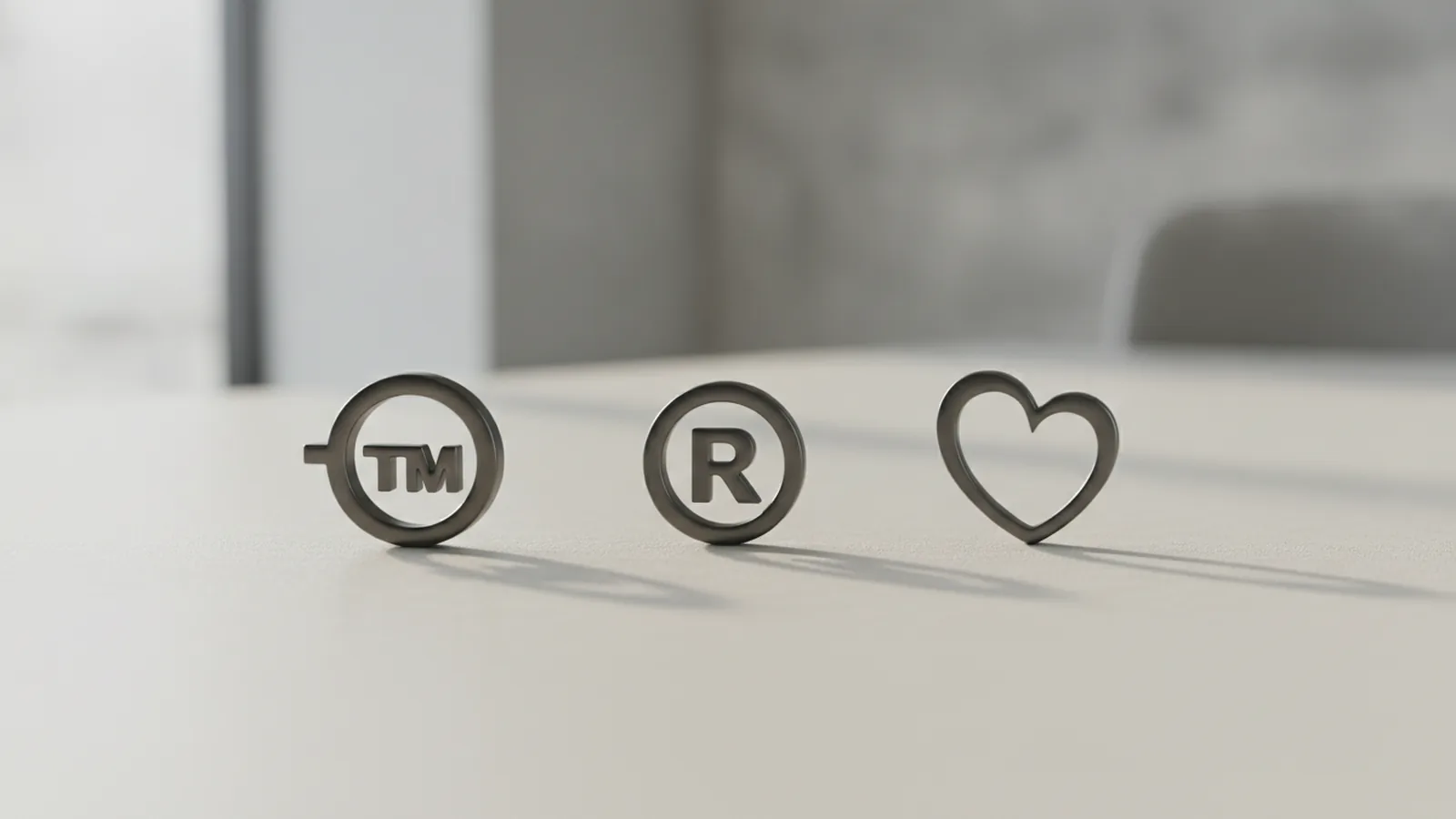
Understanding trademark symbols
In plain terms, the “TM” symbol is a way to tell the public you claim rights in a trademark, even if it is not registered yet. This is the most common reason people search “what is TM trademark” and “tm trademark meaning.”
Trademark symbols are visual signals, not magic words. They change what you are claiming, and they can affect how strongly you can enforce your rights. They do not replace trademark registration, legal advice, or proper monitoring.
Below is how the common symbols work and when each one is used in real brand protection scenarios.

What is the TM symbol?
The TM symbol (™) is used to mark a trademark that is claimed but not necessarily registered. That means you are asserting rights in the name, logo, slogan, or other brand identifier under trademark law.
A key point in the trademark symbol meaning is the “unregistered” idea. Many people call these “common law trademarks.” You can still have enforceable rights based on actual use, even without registration.
However, unregistered rights are typically narrower and harder to prove than registered rights. The strength of protection often depends on where and how you use the mark, plus other factors like consumer confusion.
- TM indicates a claim of trademark rights.
- TM does not mean the mark is registered.
- TM can be used while a trademark application is pending.
If you are wondering “how to use TM symbol,” the practical answer is simple. Use ™ when you are using the mark in commerce as a brand identifier and you want to signal that claim publicly.
Differences between TM, ®, and ℠
People often ask for the “difference between tm and r,” because both involve trademark-style symbols. The circled R (®) is the one with the strongest legal meaning.
Here is the standard comparison.
| Symbol | What it claims | Registration status | Best use case |
|---|---|---|---|
| ™ (TM) | Claim of rights in a trademark | Not necessarily registered | Branding for goods, and also during a registration application process |
| ® | Registered trademark | Registered | After registration is granted |
| ℠ (SM) | Claim of rights in a service mark | Not necessarily registered | Services branding instead of goods branding |
The ® symbol is reserved for registered trademarks. It signals that the mark has been examined and registered, which usually gives the owner stronger legal protections.
The ℠ symbol (SM) is similar to TM. The difference is scope: it relates to services rather than goods. This matters when you classify what you sell and how trademark classification works in practice.

When to use the TM symbol
You can use the TM symbol when you are using a mark to identify goods or services in a way that functions as a trademark. That usually means the mark appears on packaging, product listings, signage, websites, or ads tied to the goods or services.
It is also common to use ™ during the trademark application process. In other words, “TM can be used while an application for trademark registration is pending” because you are not claiming registration. You are simply claiming rights as you seek registration.
To decide whether TM fits your situation, focus on how you are using the mark, not on what you hope to happen later. If consumers see your mark as a source identifier, ™ is often appropriate while you build your case and seek registration.
- Start using the mark. Make sure it is actually used in commerce as a brand identifier.
- Add ™ to the mark consistently. Place it near the mark where the public sees it.
- If you file for registration, keep ™ or switch later. Use ™ while pending, then use ® only after registration is granted.
- Keep records. Save dates of first use, samples, and where you used the mark.
This approach supports brand protection goals like showing what you claimed and when. It can also help in trademark infringement disputes where evidence matters.

Legal implications of using TM
Using ™ is generally less risky than using ®, because it does not claim that the mark is registered. Still, it is not “risk-free.” It is a public statement that you claim trademark rights in the mark.
Unregistered trademark rights can be enforced, but “limited protections” is the right framing. Registration can make it easier to claim priority and argue for broader rights. Without registration, you often need stronger proof of use, reputation, and impact in your market.
Also, trademark infringement still matters even if you only use ™. If someone else uses a confusingly similar mark, they may be infringing your rights, and you may have remedies. The strength of those remedies can depend on the facts, including trademark classification and how the marks are used.
Here is how to think about “legal protections” in practice.
- TM supports a claim. It can help show you treat the mark as a trademark.
- Registration usually strengthens enforcement. Registered marks typically have broader, easier-to-protect rights.
- Use still needs to be defensible. You must be able to show use and likely confusion.
Important: ™ is not a substitute for proper trademark registration. It signals a claim while you build rights, not automatic entitlement to broad protection.
If you plan a larger rollout, it is often smart to align branding, evidence, and the trademark application process. That alignment can make enforcement and disputes simpler later.
Common mistakes with trademark symbols
Most problems come from misunderstanding what each symbol promises. The biggest red flag is using ® too early.
Misuse of the ® symbol before a trademark is registered can lead to legal penalties. It can also damage credibility in disputes, because you would be presenting false claims to the public about registration status. This is one reason people ask “difference between tm and r” before they add symbols to their branding.
Other frequent mistakes include the following.
- Using ™ when you have no real use. Simply reserving a domain name is not always trademark use.
- Using ™ for a mark that functions only as a description. If it does not act as a source identifier, it may not work as a trademark.
- Switching symbols without checking registration status. Use ® only after registration is granted.
- Using SM when you meant TM. ℠ (SM) is for services. TM is often used for goods, though in practice many owners mark mixed offerings consistently.
Finally, do not assume symbols end the need for clearance or monitoring. Even with ™, you could face a trademark infringement claim if another party has stronger rights in a similar mark.
If you are unsure, treat the symbols as part of a broader brand protection plan. That plan should also include searching existing marks and getting legal advice for your specific situation.
Conclusion and further resources
The “what is tm trademark” question has a straightforward answer: ™ is a public claim of trademark rights in a mark that is not necessarily registered. The “tm trademark meaning” is about claimed rights, not registration. That is why the TM symbol can be used during a trademark application process, while ® should wait for registration.
The “difference between tm and r” comes down to one promise. ® is for registered marks only, and it carries the highest level of legal protection. The SM symbol (℠) is similar, but it is meant for service marks rather than goods.
If you want to build a stronger strategy, pair symbol use with solid evidence, clear branding, and timely trademark registration steps. That combination is usually what supports enforcement when disputes arise.
For more on how trademark systems handle registration and rights, see the Trademark Act and USPTO trademark guidance for foundational concepts and terms.
Frequently asked questions
- What is the TM trademark symbol meaning?
- The TM symbol means you claim rights in a trademark, even if it is not registered. It is a notice to the public, not a registration certificate.
- What is the difference between TM and ®?
- TM (™) can be used for unregistered marks. The circled R (®) is reserved for marks that are actually registered.
- Can I use TM while my trademark application is pending?
- Yes. You can use ™ while your application is pending because you are not claiming registration.
- What does the SM symbol mean compared with TM?
- ℠ (SM) is for service marks, meaning services rather than goods. It is similar to ™ in that it may be unregistered.
- Is using the ® symbol before registration illegal?
- It can be. Misusing ® before registration may lead to legal penalties and problems in disputes.
Related reading

How Hard Is It to Trademark a Name? Process, Challenges, and Costs
Trademarking a name can be complex. Here’s what to expect, step-by-step, and where problems happen.

What Is WTP Trademark Publication? Purpose, Steps, and Impact
Understand WTP trademark publication, the public notice step, and how the 30-day opposition period works.

Murdaugh Law Firm: Its Status and Future
PMPED lives on as Parker Law Group, despite the damage caused by Alex Murdaugh's crimes.