Vascular Compliance: How Blood Vessels Handle Pressure
Learn how vessel stretch affects pressure, blood flow, and vascular health.
What Is Vascular Compliance?
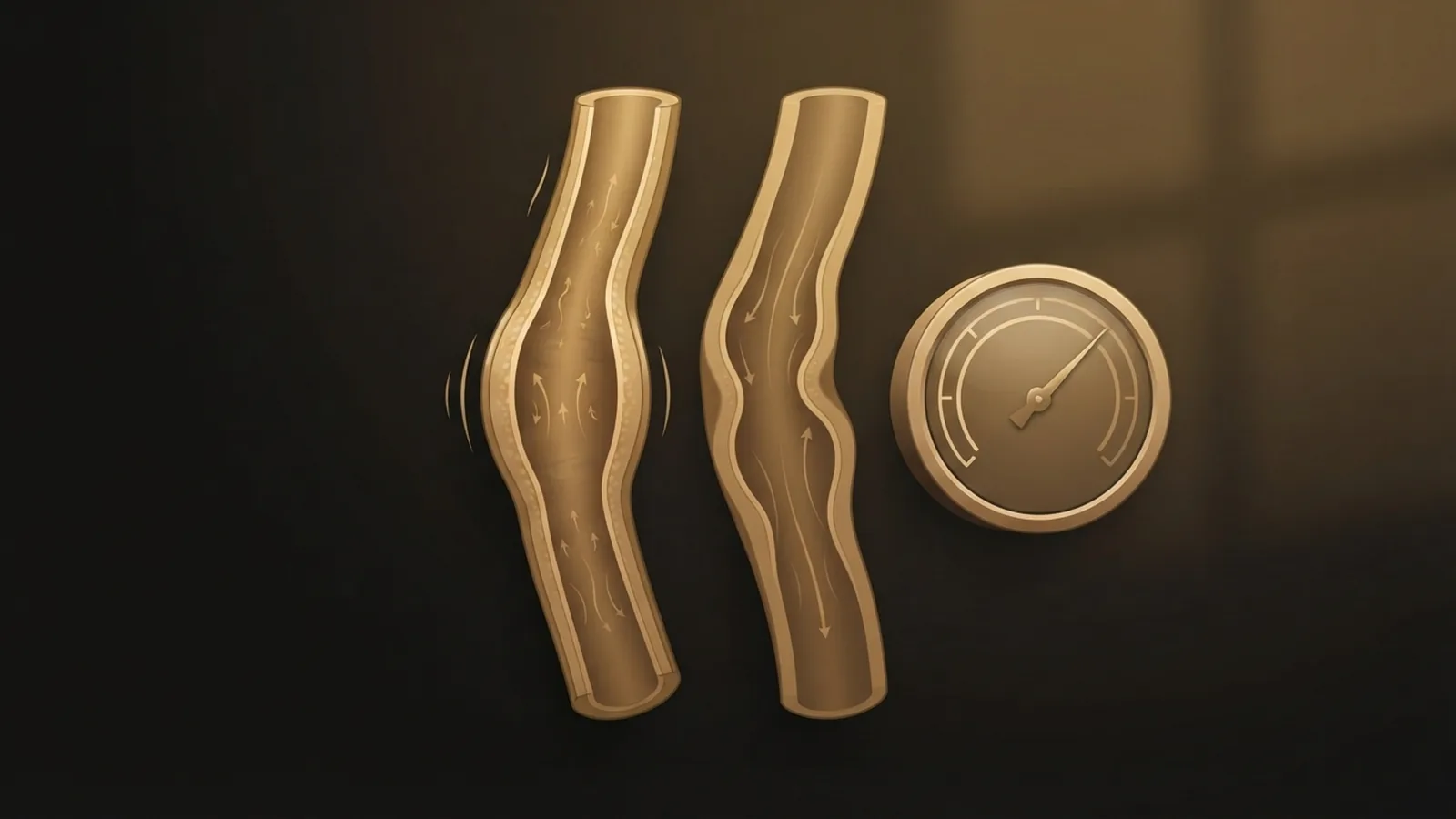
Vascular compliance is a blood vessel’s ability to expand and contract as pressure changes. It helps vessels hold blood and keep blood flow steady. In simple terms, compliance shows how much a vessel stretches when pressure rises.
The vascular compliance definition uses a pressure-volume relationship. The formula is compliance = change in volume divided by change in pressure, or ΔV/ΔP. A large volume change from a small pressure change means high compliance.
A small volume change from the same pressure rise means low compliance. The vessel is then stiffer. This measure differs from elasticity, which describes how well a vessel returns to its former shape.
Imagine adding a small fluid volume to a soft tube. The tube expands, so pressure rises only a little. Add that volume to a stiff tube, and pressure rises more sharply.
That pressure rise is often brief at first. The vessel wall may then stretch further over time. This response is called stress relaxation, and it shows why compliance can change during one pressure event.
Why Vascular Compliance Matters
Vascular compliance supports normal blood vessel function. Arteries receive blood in pulses from the heart. Their walls expand during each heartbeat and recoil between beats.
This action changes a pulsating flow into a steadier flow. It also helps protect small vessels from sudden pressure peaks. The aorta plays a major role because it stores part of each heartbeat’s volume.
Veins provide a different service. Their high compliance lets them hold large blood volumes at low pressure. Changes in vein shape can shift blood toward the heart when the body needs more blood flow.
Good compliance does not mean that vessels should stretch without limits. Vessel walls need enough strength to resist damage. Healthy control depends on a balance between stretch, recoil, and wall strength.
- It helps smooth the heart’s pressure pulses.
- It supports steady flow through smaller vessels.
- It lets veins act as blood volume stores.
- It helps the body adjust blood flow during activity.
Vascular tone also affects this balance. Tone means the level of tightness in vascular smooth muscle. A change in tone can alter vessel width within seconds.
What Changes Vascular Compliance?
Several factors affect vascular compliance at the same time. Vessel size, wall structure, pressure, and smooth muscle activity all matter. The effect can differ between one vessel and another.
Vessel wall structure
Elastin lets a vessel stretch and recoil with each heartbeat. Collagen gives the wall more strength but less stretch. A higher share of collagen often makes a vessel less compliant.
The amount and placement of these fibers also matter. Damage to the inner lining can change wall behavior. Fat deposits and scar-like changes can make the wall thicker and stiffer.
Smooth muscle tone
Vascular smooth muscle contraction reduces compliance. The vessel narrows and resists expansion. Smooth muscle relaxation increases compliance because the wall can widen more easily.
Nerve signals and body chemicals can change this muscle tone. Cold, stress, and some hormones can narrow vessels. Heat, local blood flow signals, and certain medicines can widen them.
Pressure and time
Compliance is not always a fixed number. Many arteries become less compliant as pressure rises. Their walls recruit stronger fibers, which limits further expansion.
Time also matters after a volume enters a vessel. The wall may stretch at once, then stretch more slowly. This delayed shift is the dynamic side of vascular compliance.
| Factor | Typical effect |
|---|---|
| Smooth muscle contraction | Lower compliance |
| Smooth muscle relaxation | Higher compliance |
| More collagen in the wall | Lower compliance |
| Higher elastin content | Greater stretch and recoil |
| Higher vessel pressure | Often lower compliance |

Arteries and Veins Behave Differently
Veins have much higher compliance than arteries, especially at lower pressures. Their thin walls and large inner spaces let them hold more blood. This makes veins the main storage vessels in the circulation.
Arteries operate under higher pressure. Their walls contain more smooth muscle, elastin, and collagen. This design helps them withstand each heartbeat and maintain forward blood flow.
The same volume change can produce different pressure changes in each vessel type. A vein may accept a large extra volume with little pressure change. An artery may show a much larger pressure rise.
Vein compliance also changes with body position. Standing allows gravity to move blood into the legs. Leg muscles can squeeze veins and help push blood back toward the heart.
- Arteries carry blood under higher pressure.
- Veins hold more blood with smaller pressure changes.
- Arterial walls provide strong recoil after each heartbeat.
- Vein shape changes can shift blood volume quickly.
This difference explains why the pressure-volume relationship must include vessel type. A single compliance value cannot describe the whole circulation. The vessel’s location and pressure range both matter.
What Low Vascular Compliance Means
Low vascular compliance means a vessel cannot expand easily as pressure rises. In large arteries, this often increases the pressure load on the heart. It can also raise the gap between systolic and diastolic pressure.
Stiff arteries absorb less of the heart’s pulse. More force then travels into smaller vessels. Over time, this may affect tissues that rely on steady, low-pressure blood flow.
Arteriosclerosis can reduce aortic compliance. This broad term describes hardening and loss of normal vessel flexibility. The change may involve wall thickening, calcium, or other wall damage.
Low compliance does not identify one disease by itself. It acts as a sign of altered vessel structure or tone. Doctors must assess it alongside blood pressure, symptoms, and other health findings.
Short-term changes can also occur without lasting wall damage. A burst of smooth muscle contraction may lower compliance for a short time. Relaxation can then restore a more flexible response.
Vascular Compliance and Aging
Vascular compliance usually falls with age, especially in the aorta. Elastin fibers can break down over many years. Collagen can become more prominent and less flexible.
These changes make the aortic wall stiffer. The heart then faces a greater pressure load during each beat. Systolic pressure may rise, while the artery stores less of each pulse.
Aging does not affect every person in the same way. Smoking, high blood pressure, diabetes, and low activity can speed vessel stiffening. Good control of these risks may help protect vessel function.
Age-related changes also affect the timing of pressure waves. A stiff artery sends waves through the body faster. Reflected waves may return sooner and add to pressure near the heart.

Vascular compliance and aging are linked, but age is not the only cause. Vessel health reflects years of pressure, inflammation, diet, activity, and disease. A health professional can judge the overall pattern.
How Compliance Relates to Blood Pressure
Blood pressure depends partly on how much blood enters a vessel and how much the wall expands. A compliant artery can accept extra volume with a smaller pressure rise. A stiff artery needs more pressure for the same volume.
This link helps explain why pressure can change after fluid enters the circulation. The first pressure rise may be sharp. Vessel stretch and stress relaxation can then change the later pressure level.
The heart, arteries, small vessels, and veins all shape the final result. Compliance is one part of that system. It does not replace measures such as blood pressure or heart rate.
Useful questions include how the vessel responds now and how that response changes over time. A single reading may miss short-term changes. Repeated checks can give a clearer view of vascular health.
- Higher compliance usually means less pressure rise for added volume.
- Lower compliance usually means a sharper pressure response.
- Arterial stiffness can increase the heart’s workload.
- Vein stretch helps control blood storage and return.
Key Takeaways
Vascular compliance describes how vessels respond to pressure changes. It is measured as ΔV/ΔP, or the change in volume divided by the change in pressure.
Veins are far more compliant than arteries at low pressures. Arterial compliance supports smooth blood flow, while vein compliance supports blood storage.
Smooth muscle contraction lowers compliance, and relaxation raises it. Aging and arteriosclerosis can reduce aortic compliance, which may raise pressure and heart strain.
Compliance also changes with pressure and time. A brief pressure shift after added fluid can reveal this dynamic response.
Frequently asked questions
- What is vascular compliance?
- Vascular compliance is the ability of a blood vessel to expand and contract as pressure changes. It is measured as the change in volume divided by the change in pressure.
- Why is vascular compliance important?
- It helps arteries smooth the heart’s pulse and helps veins store blood. Low arterial compliance can increase pressure and heart strain.
- Are veins more compliant than arteries?
- Yes. Veins have much higher compliance than arteries, especially at lower pressures. They can hold more blood with a smaller pressure rise.
- What factors affect vascular compliance?
- Vessel wall fibers, smooth muscle tone, pressure, age, and disease all affect compliance. Muscle contraction lowers it, while muscle relaxation raises it.
- How does aging affect vascular compliance?
- Aging often reduces aortic compliance as elastin breaks down and stiffer collagen becomes more prominent. This change can increase systolic pressure and heart workload.
- Can low vascular compliance affect blood pressure?
- Yes. A stiff artery expands less when blood enters it. The same added volume can then cause a larger pressure rise.
Related reading
Ventricular Compliance: Heart Filling, Pressure, and Disease
Learn how ventricular compliance affects heart filling, pressure, and disease.

How Hard Is It to Trademark a Name? Process, Challenges, and Costs
Trademarking a name can be complex. Here’s what to expect, step-by-step, and where problems happen.

What Is WORM Compliance? Requirements, Rules, and Use Cases
Understand what WORM compliance is, plus key rules for finance and healthcare data.